3 Template Safeguards for Engineers: Programmatic SEO Pages After 2026

Programmatic SEO pages combine one template with a structured dataset to publish many search-optimized pages from a repeatable pattern. They work when you have real data behind every page, a keyword pattern that repeats across dozens or thousands of variants, and the QA capacity to catch thin pages before Google does. Skip the tactic if any of those three is missing. After the 2025 scaled-content enforcement changes, genuine per-page value isn’t optional. It’s the entire game.
TL;DR:
- Programmatic SEO is effective only when there is a diverse, real dataset supporting each page and sufficient search volume across variants.
- Building high-quality pages requires manually creating initial examples, locking schema, and implementing fallback rules before automating to avoid thin content and indexing issues.
- Large-scale page sets benefit from segmented sitemaps, deliberate crawl management, and cross-engine indexing checks to prevent waste of crawl budget on low-value pages.
- Launching in moderate batches with automated and manual validation helps identify template trust issues and prevent widespread indexing problems.
- Ongoing management involves systematic performance monitoring, internal linking, and dataset maintenance to sustain rankings and prevent traffic decay.
Table of Contents
- What Are Programmatic SEO Pages, and How Do They Differ From Regular SEO?
- Real Examples: Integration Pages, Location Pages, and Product Catalogs
- Is Programmatic SEO Right for Your Business? A Suitability Checklist
- How to Build Programmatic SEO Pages: A Step-by-Step Checklist
- Template Design: Three Uniqueness Vectors That Prevent Thin Content
- Managing Crawl Budget and Indexing at Scale
- Launch Controls: How to Scale Programmatic Pages Without Getting Penalized
- Which Metrics Actually Matter for Programmatic SEO?
- How Quicktoimpress Approaches Programmatic SEO
- Author Perspective: The Real Trade-Off Behind Programmatic SEO
- Put Programmatic SEO to Work With Quicktoimpress
- Sources
- FAQ
What Are Programmatic SEO Pages, and How Do They Differ From Regular SEO?
A programmatic page follows a simple formula: head term plus modifier repeated across a dataset. “Project management software” becomes “best project management software for [industry],” multiplied across fifty industries. “Plumber in Austin” becomes “plumber in [city],” multiplied across every metro area a business serves. The head term plus modifier structure turns what would be months of manual writing into a dataset problem: fill in the fields, run the template, publish.
Traditional SEO writes one page at a time, often built around a single high-intent keyword and a lot of manual research. Programmatic SEO inverts that. You write the template once and let structured data (locations, integrations, product specs, comparison variables) populate the variable parts of the page. The manual effort moves upstream, into schema design and quality rules, instead of happening page by page.
That trade-off only pays off under specific conditions:
- You have a dataset with real variation between rows, not just a name swapped into a sentence.
- The search demand repeats across dozens or hundreds of near-identical intents.
- You can commit engineering or no-code tooling time to build and maintain the template.
If your topic has five real variations, write five real pages. Programmatic SEO earns its cost only at volume.
Real Examples: Integration Pages, Location Pages, and Product Catalogs
Three patterns show up again and again across companies that scale search traffic this way.
- Integration and use-case pages. SaaS companies publish a page for every tool they connect to (“[Product] + Slack,” “[Product] + Salesforce”), each one built from the same template with the integration name, use case, and setup steps swapped in.
- Location and service pages. Multi-location brands combine a service with a city or region (“HVAC repair in Denver,” “HVAC repair in Aurora”), scaling coverage across a service area without hand-writing hundreds of city pages.
- Product and filter pages. Ecommerce catalogs generate pages from attribute combinations, such as size, color, or material filters, so “waterproof hiking boots size 11” gets its own indexable page instead of living only behind a filter widget.
Enterprise datasets built this way have driven page sets into the tens of thousands, with integration and location pages cited as the clearest large-scale examples of the pattern generating meaningful search impressions. The common thread isn’t the industry. It’s the dataset. Each pattern above works because the underlying data actually differs row to row: a different integration’s setup flow, a different city’s service area and licensing rules, a different product’s real specs. Swap in the same three sentences with a new city name pasted in, and you’ve built the exact kind of page Google now treats as scaled junk rather than useful content.
Is Programmatic SEO Right for Your Business? A Suitability Checklist
Programmatic SEO earns its engineering cost only past a certain scale. As a working heuristic, if your modifier list has fewer than 20 to 30 genuinely distinct values, hand-write the pages instead. Below that threshold, the QA and template overhead costs more than it saves.
Tooling splits into two camps. No-code stacks (a spreadsheet or Airtable base feeding a website builder) get a pilot live fast, with less flexibility on custom logic. Developer stacks (a database, a templating layer, custom validation) cost more upfront and handle edge cases, conditional content, and schema markup with far more precision. Most teams start no-code to validate demand, then rebuild in code once the pattern proves out.
The three risks that kill programmatic SEO projects:
- Thin pages that just swap a name into a generic sentence, with no real per-page data.
- Crawl budget waste, where search engines spend their limited crawl allowance on low-value pages instead of your priority content.
- Maintenance debt, where a dataset goes stale and nobody notices until traffic drops.
Pro Tip: Before building anything, pull your top 20 modifier values into a spreadsheet and manually check how different the underlying data actually is row to row. If you can’t tell one row from another without the label, your template can’t either.
How to Build Programmatic SEO Pages: A Step-by-Step Checklist
Building a page set that survives contact with Google’s quality systems means treating the template like a product, not a one-off writing project.
- Validate the keyword pattern. Pull query data from Google Search Console and a keyword research tool to confirm the head term plus modifier pattern actually gets searched, not just theorized. Check search volume across a sample of modifiers, not just the top one or two.
- Assemble the dataset and lock a schema. Before writing a line of template code, define a JSON schema for every field the page needs: name, location, specs, pricing, availability, whatever applies. Locking the schema early prevents a scramble later when a field turns out to be missing for half the dataset.
- Hand-write 3 to 5 example pages first. This step gets skipped constantly, and it’s the most important one. Writing real examples by hand before building the template sets the actual quality bar the automated version has to hit. If you can’t write a good page by hand, the template won’t magically produce one.
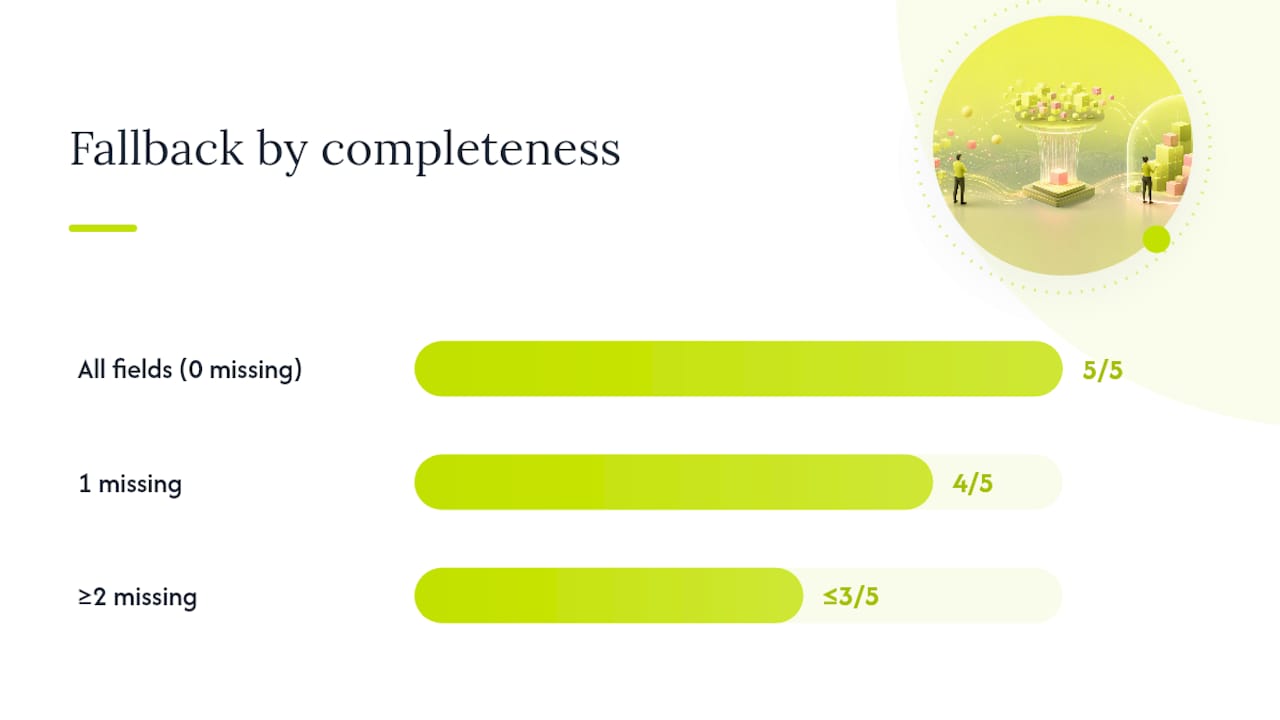
- Build the template with fallback logic. Every field needs a defined fallback for missing data: a default sentence, a hidden section, or a rule to skip publishing that page entirely if too many fields are blank. Validate the template against the schema before connecting it to real data.
- Connect the dataset to your CMS. Common pairings include Airtable synced through Whalesync, HubSpot’s Content Hub, WordPress with WP All Import, or Webflow’s CMS collections. The right choice depends on your existing stack more than any inherent superiority.
- Segment sitemaps and wire internal links before publishing. Split your XML sitemap by page type or batch so you can monitor indexing separately, decide noindex rules for low-value variants, and connect each new page into a hub-and-spoke internal linking structure from day one.
Skipping step three is the single most common reason programmatic launches underperform. Teams jump straight to the template, discover the output reads generically, and only then go back to figure out what “good” looks like.
Template Design: Three Uniqueness Vectors That Prevent Thin Content
Every template needs at least three distinct ways to make each page genuinely different from its siblings, not just cosmetically different. SEOGraphy’s guidance on programmatic templates identifies the three vectors that reliably clear quality filters:
- A data-driven stats block. A table or callout populated with real numbers specific to that row: pricing, specs, review counts, local statistics.
- Contextual prose tied to the modifier. Not a mad-libs sentence with the city name swapped in, but a paragraph that reflects something actually true about that specific variant.
- Relational listings or nearby alternatives. Links to similar or adjacent items (nearby locations, comparable products, related integrations) that only make sense for that specific page.
Title tags need to stay in the 50 to 60 character range, and your H1 should not just repeat the title tag verbatim. A slight variation in phrasing between the two signals a page built with intent rather than a mechanical find-and-replace.
Fallback logic matters as much as the happy path. If a row is missing more than roughly a third of its required fields, that page should either get a noindex tag or skip publishing entirely rather than go live half-empty. A page with three populated fields and two “coming soon” placeholders does more damage to your domain’s overall quality signal than simply not publishing it.
Managing Crawl Budget and Indexing at Scale
Large page sets need deliberate crawl and indexing controls, or search engines will waste their limited attention on the wrong pages.
Split your sitemap into segments by page type, date, or batch, and submit each segment separately rather than dumping everything into one file. That segmentation makes it far easier to spot which specific batch has an indexing problem, instead of guessing across ten thousand undifferentiated URLs. Submitting through both the standard sitemap protocol and IndexNow speeds up discovery for time-sensitive pages.
Practical rules for keeping crawl budget pointed at pages that matter:
- Apply
noindexto low-value variants (near-duplicate filter combinations, pages with almost no unique data) instead of letting them compete for crawl attention. - Never block those same low-value pages in
robots.txtif you still want to verify their indexing status. A robots.txt block prevents crawlers from even reading the noindex tag. - Use self-referencing canonical tags on every parameterized route so filter combinations and tracking parameters don’t fragment into duplicate-content confusion.
- Check indexing status in both Google Search Console and Bing Webmaster Tools, since crawl budget and indexing pipelines differ across engines and a page indexed in one can sit unindexed in the other for weeks.
Skipping the cross-engine check is a common blind spot. Teams optimize entirely for Google, then discover months later that Bing (and by extension, some AI answer engines that lean on Bing’s index) never picked up the page set at all.
Launch Controls: How to Scale Programmatic Pages Without Getting Penalized
Publish a pilot batch of a moderate number of pages first, then watch indexing rate and impressions over a few weeks before launching the next batch. That window is long enough to see whether Google trusts the template or flags it, and short enough that a bad pattern doesn’t compound across thousands of URLs before you notice.
Before that pilot goes live, run it through two layers of review:
- Automated validation rules that check every page against minimum thresholds: word count, required fields populated, no broken schema markup, no duplicate title tags across the batch.
- Manual sample review of roughly 10% of the pilot batch, weighted toward edge cases: rows with unusual data, missing fields, or values at the extreme ends of your dataset’s range.
Set rollback criteria before launch, not after: if the indexing rate falls below your target or manual reviewers flag more than a handful of thin pages, pause the next batch and fix the template first. Wire your hub-and-spoke internal linking structure into the pilot batch too, not just the eventual full launch. Retrofitting internal links across ten thousand pages later is a much bigger job than building the linking logic into the template from day one.
Pro Tip: Log every manual review decision in a shared spreadsheet, including the pages you pass on scaling. That log becomes your template’s revision history, and it’s the fastest way to spot recurring data gaps before batch three ships.
Which Metrics Actually Matter for Programmatic SEO?
Indexation rate is the first signal worth tracking, and a reasonable early target is for the majority of a batch to be indexed within four weeks of publishing. Fall well short of that and the template has a trust or quality problem worth fixing before the next batch ships.
| Metric | What it tells you | Check cadence |
|---|---|---|
| Indexation rate | Whether Google trusts the template enough to index most pages | Weekly for first 4 weeks, then monthly |
| Impressions per page | Whether the keyword pattern actually has demand | Weekly |
| Click-through rate | Whether the title tag and snippet match search intent | Monthly |
| Engagement time | Whether visitors find the page substantive once they land | Monthly |
Pages that stay unindexed past eight weeks, or that accumulate impressions with a click-through rate well below your site average, belong in a pruning review. Either rework the template section causing the drop, consolidate several thin variants into one stronger page, or deindex the row entirely if the underlying data never justified a standalone page. Measuring performance systematically rather than checking metrics sporadically is what separates a page set that compounds from one that quietly decays. Report on the batch level, not just the aggregate, so a strong-performing pilot doesn’t mask a weak batch three.
How Quicktoimpress Approaches Programmatic SEO
Quicktoimpress works as a growth engineering partner that embeds directly with marketing, revenue, and technology teams, building the connected systems behind sustainable growth rather than handing off a template and disappearing. The same people who design the page-set strategy also build the schema, wire the CMS integration, and stay on to fix what breaks after launch.
That matters for programmatic SEO specifically because the work spans several disciplines at once:
- Growth platform and commerce engineering for teams running catalog-driven or Shopify and BigCommerce page sets.
- CRM and revenue operations work when the dataset behind your pages lives in HubSpot, Salesforce, Pardot, or ActiveCampaign.
- Technical SEO, answer-engine optimization, and automation across the full capabilities list, covering the schema validation and internal linking work programmatic sets require.
Programmatic SEO fails most often when strategy and execution sit in separate hands. A plan without an engineer to build the template stalls. A template without a strategist behind the uniqueness vectors turns into exactly the thin-content pattern Google now suppresses.
Author Perspective: The Real Trade-Off Behind Programmatic SEO
Programmatic SEO is front-loaded engineering that pays off as a compounding traffic asset, but only when the data and the search intent both genuinely exist. Too many teams chase page count as a vanity metric, publishing thousands of thin variants that inflate a sitemap without moving revenue.
The better question isn’t “how many pages can we make?” It’s “does this dataset support genuine per-page value, and can our audience actually monetize once they land?” Post 2025, quality control isn’t a nice-to-have layered on top of the strategy. It’s the strategy. Teams that treat their template like a piece of software, with a locked schema, automated checks, and a real QA gate, are the ones still ranking a year later. Teams that treated it like a content trick are mostly gone from the index.
— Service
Put Programmatic SEO to Work With Quicktoimpress
Some programmatic SEO providers combine strategy design and execution within one team, where the people who design the keyword pattern and schema also build the template, connect the CMS, and oversee QA to maintain page quality.
That matters most in the three places programmatic projects usually stall: the growth platform and commerce engineering work needed to actually build and host thousands of pages, the AI search and automation tooling that handles schema validation and content generation at scale, and the ongoing revenue operations work that keeps your dataset connected to CRM systems like HubSpot or Salesforce instead of going stale in a spreadsheet. Engagements start with an audit of your existing dataset and keyword patterns to confirm the tactic fits before any template gets built. Pricing runs from $3,500 a month at the Core capacity tier up through Growth and Scale capacity for larger page-set operations. If you have a dataset that looks like it could support fifty or five hundred pages, start with a capabilities review and find out before you commit engineering time to a template that never should have shipped.
Sources
For deeper implementation detail, the complete guide to building programmatic pages at scale covers the pre-launch checklist in full, including sample sizing and schema locking. SEOGraphy’s template guide breaks down the three uniqueness vectors with worked examples. For the 2026 launch cadence and crawl budget rules referenced throughout this article, see IndexCraft’s programmatic SEO guide. No-code teams evaluating tooling should review HubSpot’s programmatic SEO overview for a look at integrated CMS and AI-assisted dataset workflows.
- What is Programmatic SEO? The Complete Guide to Building 20,000 Pages at Scale
- How to Build Programmatic SEO Page Templates That Rank | SEOGraphy Learn
- Programmatic SEO Guide 2026 | IndexCraft
FAQ
What Does Programmatic SEO Mean?
Programmatic SEO means generating many search-optimized pages from one template combined with structured data, following a head term plus modifier pattern like “[service] in [city].” Each page targets a slightly different keyword variant while sharing the same underlying design and logic.
Is SEO Dead Now With AI?
SEO isn’t dead, but the rules around scaled, low-effort content tightened considerably after Google’s 2025 enforcement changes targeting thin, mass-produced pages. Programmatic pages that deliver genuine per-page data and context still rank; pages built as keyword-swapped filler are the ones getting suppressed.
What Are SEO Pages?
SEO pages are web pages built specifically to rank for a target search query, structured around the keywords, intent, and content a searcher expects to find. Programmatic SEO pages are one category of SEO page, built from a shared template and a dataset rather than written individually.
What Is the 80/20 Rule in SEO?
Applied to programmatic SEO, a small share of modifiers or page types drives most of the traffic and value, while a long tail of low-demand variants contributes little.
How Much Does Quicktoimpress Charge for Programmatic SEO Work?
Quicktoimpress engagements start at $3,500 a month for Core capacity, with Growth and Scale capacity tiers available for larger page-set builds and ongoing maintenance. Exact scope and pricing depend on the size of the dataset and the technical stack involved.